problem getting gas to the carburetor of my toro weedeater, what to check?
Gas Weed Eater Won't Commencement? Attempt This
Weed eater, weed whacker, string trimmer – no thing what you call it, here's how to get it running again.

No matter what you lot phone call information technology – weed eater, weed whacker, string trimmer – chances are at some point it won't start. Few things are more abrasive than destroying your shoulder trying to starting time a gas weed eater when at that place's work to do.
Fortunately, gas weed-eater engines are pretty uncomplicated, so almost DIYers with a few tools and some basic know-how can troubleshoot a stubborn trimmer and become it running.
Guidelines For Troubleshooting A Gas Weed Eater That Won't Start
1) Check The Gasoline
Gasoline tin break downward in as piddling as 30 days, peculiarly today's ethanol-containing gas.
Homeowners sometimes stash their string trimmer in the garage at flavor's end without stabilizing the gas. Oxygen has all winter to pause down and ruin the gasoline, leaving you with a trimmer that won't first in the spring.
If your trimmer falls into this category, empty the old gas from the fuel tank and supplant information technology with fresh fuel.

If your weed eater won't start, trying removing the air filter and spraying carburetor cleaner into the intake.
2) Clean The Carburetor
Once gas breaks down, varnish, gums and other debris can class inside the carburetor and clog the tiny fuel passages. This prevents fuel from reaching the combustion chamber and igniting, leaving you to struggle with a trimmer that won't offset.
Remove the air filter and spray carburetor cleaner into the intake. Let it sit for several minutes to assist loosen and deliquesce varnish. Replace the filter and endeavour starting the trimmer.
If this doesn't solve the problem, consider disassembling the carburetor to requite it a more than thorough cleaning.
Beware, even so – taking autonomously a carburetor marks a signal-of-no-render, of sorts. Understanding how the delicate gaskets, tiny screws and needle valves go dorsum together can be a challenge, even on a relatively uncomplicated string-trimmer carburetor. Take pictures with your phone throughout the process to help reassembly. Clean all the openings and passages with carburetor cleaner.
If you're reluctant to take autonomously the carb, visit the servicing dealer.

Remove the spark plug and employ light sandpaper to clean electrode deposits to assist set a gas trimmer that won't start.
3) Clean/Supervene upon Spark Plug
Oil deposits and carbon can foul the spark plug in a two-stroke engine if a low-quality oil is used. Deposits on the electrode forestall the plug from firing properly, which can reduce performance or prevent the engine from running altogether.
Plugs are inexpensive, and so replace it if it's fouled. If y'all don't have a new plug available, clean the deposits from the electrode with light-duty sandpaper and check the gap. Consult the possessor's transmission for the right gap size.
If y'all know the spark plug is good, just the engine still doesn't produce spark, the coil is likely to blame and requires replacement.
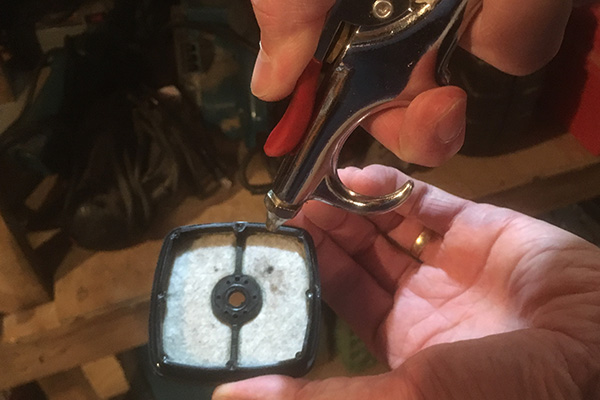
Direct compressed air from the inside of the air filter toward the outside to remove debris that may be restricting airflow.
4) Clean/Supercede Air Filter
A clogged air filter prevents the engine from receiving sufficient air to operate properly.
Before removing the air filter, castor away loose debris from around the filter encompass and filter chemical element. Tap rigid filters on a tabletop or the palm of your paw to dislodge whatever dirt or debris. Compressed air too works well. Make sure you direct air through the filter from the inside to avoid lodging debris deeper in the filter.
Avoid washing paper filters as this tin can collapse their micro-fine structure. Foam filters, still, can easily be washed using mild detergent and warm water.
As with the spark plug, yet, replacement is frequently the best practice, especially if the filter is excessively dirty.
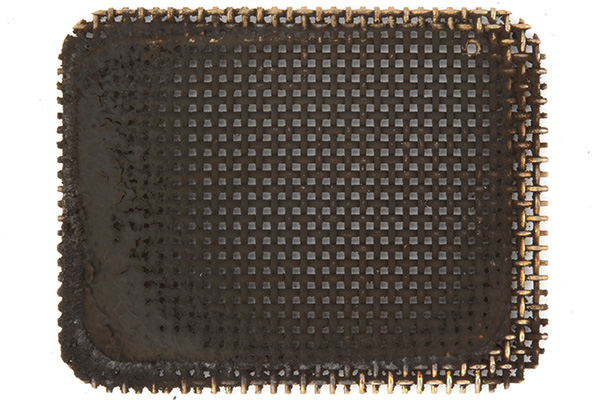
A spark-arrestor screen clogged with deposits tin can choke off airflow plenty to forbid the trimmer from starting.
five) Clean The Spark-Arrestor Screen
On many trimmers, a small screen covers the exhaust outlet and prevents sparks from exiting the muffler and potentially starting a fire.
Every bit with plug fouling, as well much oil in the gasoline, inferior oil and continued depression-rpm functioning can plug the screen with carbon deposits. This prevents exhaust-gas flow, which leads to power loss. In extreme cases, heavy deposits asphyxiate airflow enough to leave you with a weed eater that won't beginning.
To set the problem, remove the spark-arrestor screen and spray it with a heavy-duty cleaner, like AMSOIL Power Foam®, to soften the deposits earlier cleaning the screen with an annoying pad. Reinstall the screen and exam the trimmer.
Supervene upon the screen birthday if it's excessively plugged with carbon.

Constructed VS. CONVENTIONAL
Although you might know that constructed oils outperform conventional oils, you might not understand why. The differences begin at the molecular level.
Acquire More
6) Switch To A Better Ii-Stroke Oil
Low-quality oil that leads to heavy carbon is often to arraign for most of the problems on this list.
Using a good two-stroke oil that burns cleanly and helps prevent carbon deposits is one of the easiest maintenance practices you can perform to ensure your gas trimmer starts easily, runs well and last for years.
AMSOIL SABER® Professional Synthetic 2-Stroke Oil withstands high estrus to fight carbon in gas string trimmers and other two-stroke equipment. Information technology's tested and proven at whatsoever mix ratio upward to 100:1, offering the convenience of one mix ratio for all your equipment. Plus, it's formulated with gasoline stabilizer to help keep fuel fresh during brusque-term storage.
The images here show AMSOIL SABER Professional's superior cleanliness properties. It's just i reason professional landscapers, like Duluth Lawn Intendance, only trust AMSOIL products.
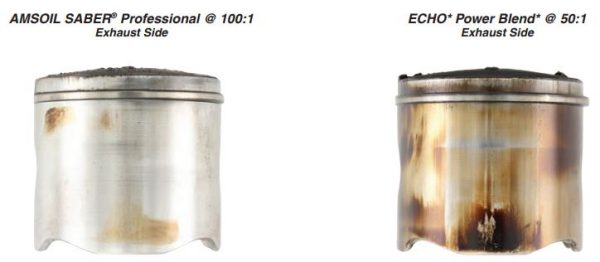
AMSOIL SABER Professional mixed at 100:1 delivers ameliorate protection against power-robbing deposits than other oils mixed at 50:1.
Follow the gas trimmer troubleshooting guidelines on this list to go your string trimmer support and running…and to requite your shoulder a break.
More like this
martinmitersell1936.blogspot.com
Source: https://blog.amsoil.com/weed-eater-wont-start-try-this/
0 Response to "problem getting gas to the carburetor of my toro weedeater, what to check?"
Post a Comment